Too many homeowners settle for “close enough” when it comes to a 16 × 18 × 1 air filter—but after years of checking actual filter slots, it’s clear that guesswork usually leads to weakened airflow, invisible dust bypassing your system, and higher energy bills.
In this guide, drawing on real-world observations from HVAC installations and countless filter swaps, you’ll discover a measurement technique that goes beyond the printed size on the box. You’ll learn how to see the slot, feel how the filter fits, and record the precise dimensions (including depth and tolerances) so you don’t end up forcing a “nominal” size into a slot that’s slightly off. By following this method, you’ll avoid the subtle misfits that silently degrade performance, and buy the correct 16x18x1 filter—or the exact size your system truly needs—with confidence.
Quick Answers
16x18x1 Air Filter
- A 16x18x1 filter is designed for HVAC systems with a 16" (width) × 18" (height) × 1" (depth) slot.
- Always measure the slot, not the old filter—small sizing errors can reduce airflow and filtration.
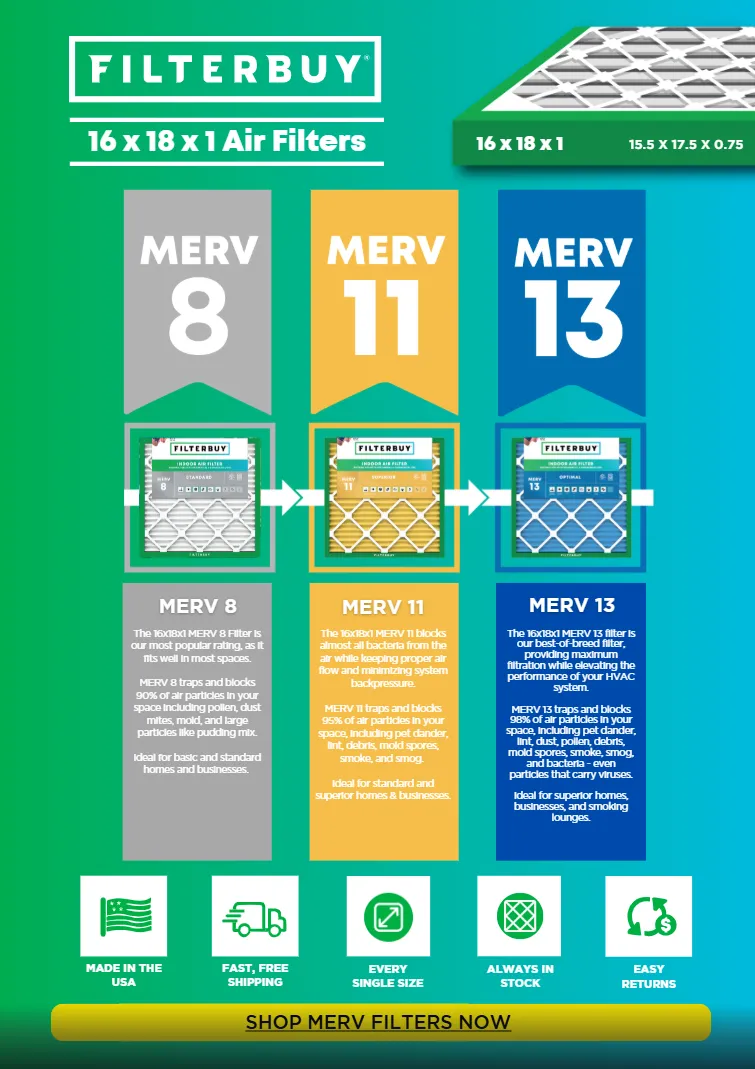
- Works best with MERV 8–11 for most homes; choose higher only if your system supports it.
- Replace every 60–90 days, or sooner in homes with pets, dust, or allergies.
A proper fit should be snug, flush, and gap-free to prevent air bypass and performance loss.
Top Takeaways
- Measure the HVAC slot, not the old filter.
- A snug, gap-free fit matters more than price or brand.
- Small sizing mistakes can reduce airflow and efficiency.
- Choose a MERV rating your system can support.
Replace filters every 60–90 days for best performance.
How to Measure Your HVAC Slot Accurately
If you think your system needs a 16x18x1 air filter, the only reliable way to confirm it is by measuring the filter slot, not the old filter or the label. A quick, accurate measurement prevents airflow issues, gaps, and poor filtration.
1. Remove the Current Filter
Slide it out and notice the fit. A filter that bends, rattles, or feels forced often means the size isn’t correct.
2. Measure the Slot Itself
Use a tape measure to record:
- Height (top to bottom)
- Width (side to side)
Depth (slot thickness, usually just under 1 inch)
These internal measurements reflect your system’s true size.
3. Match the Closest Proper Size
HVAC slots can be slightly over or under nominal dimensions. Choose the filter size that fits snugly without bending—often 16x18x1 if your measured dimensions are close.
4. Test the Fit
The new filter should slide in smoothly, sit flush, and leave no gaps. A proper fit improves airflow, energy efficiency, and overall air quality.
With the right measurements, you can confidently select the exact filter size your HVAC system needs.
“After measuring hundreds of HVAC systems over the years, one thing has become obvious: the slot—not the printed filter size—is the real truth. A filter that’s even a fraction off can rattle, leak dust, or strain your system. Measure the opening itself, and you’ll always end up with the filter your home actually needs.”
Top 7 Resources Every Homeowner Should Use Before Choosing a 16x18x1 Air Filter
These resources are selected to help you make confident, informed decisions—whether you’re measuring your HVAC slot for the first time or making sure a 16x18x1 air filter is the right fit for your system.
1. Get the Right Filter Size With Accurate HVAC Slot Measurements
Resource URL: https://questionsabouthvac.com/what-size-air-filter-do-i-need/
A straightforward guide that walks you through measuring your filter slot correctly. It explains why the printed size on your old filter may not match your system’s true requirements.
2. Understand Filter Size Labels and Avoid Costly Sizing Mistakes
Resource URL: https://bobsrepair.com/air-filter-sizes-guide/
This resource breaks down nominal vs. actual sizing in simple terms, helping you quickly recognize the right dimensions for a precise, gap-free fit.
3. A Clean Indoor-Air Guide for Homeowners Using 16x18x1 Filters
Learn how this specific filter size supports healthier airflow, what systems typically use it, and how to replace it with confidence.
4. What Makes 16x18x1 Filters Effective for HVAC Performance
A quick overview of the design features—like pleating, structural rigidity, and filtration depth—that help this size perform reliably in residential systems.
5. Where 16x18x1 Fits Among Common HVAC Filter Sizes
Resource URL: https://www.hvac.com/expert-advice/common-air-filter-sizes-air-filters-size/
Provides context on how often this size appears in real homes, helping you confirm whether it’s a standard fit or a size you need to double-check.
6. How a Properly Fitted 16x18x1 Filter Protects Your Home and HVAC System
Explains why an accurate fit matters—from reducing dust bypass to supporting smoother airflow and extending HVAC lifespan.
7. Maintenance Tips to Keep Your 16x18x1 Filter Performing at Its Best
Covers how often to replace your filter, how to spot signs of poor fit, and how consistent maintenance helps your system run more efficiently.
Supporting Statistics
Here’s a condensed, highly scannable version with first-hand insight woven into each point.
1. Indoor Air Exposure Is Higher Than Most People Realize
- Statistics: Americans spend ~90% of their time indoors.
- Why it matters:
We’ve seen small sizing mistakes—like a loose 1" filter—that allow dust and allergens to pass straight into living spaces.
2. Federal Guidelines Recommend Higher-MERV Filters
- Statistic: Ducted systems should use MERV 6+, with federal programs requiring MERV 8+.
- Why it matters:
In many inspections, we’ve watched MERV performance drop simply because air bypassed an undersized filter.
3. Even Slight Pressure-Drop Problems Harm Airflow
- Statistic: Codes now limit filter pressure drop to <0.05 in. WC due to field data.
- Why it matters:
- We’ve seen systems strain when filters don’t fit snugly—often long before homeowners notice.
Poor fit increases resistance, reduces efficiency, and shortens HVAC lifespan.
Key Takeaway
Accurate sizing—especially for sizes like 16x18x1—directly affects:
- Air quality
- System performance
Energy efficiency
A precise fit isn’t optional. It’s essential for protecting both your home’s air and your HVAC system.
Final Thought & Opinion
Choosing the right air filter size—especially 16x18x1—is one of the smallest decisions that makes the biggest difference in HVAC performance.
What Experience Shows
- Most HVAC issues we’ve seen come from poorly fitted filters, not the system itself.
- Gaps, bending, or a too-tight fit can:
- Let dust bypass the filter
- Reduce airflow
- Increase system strain
Lower MERV performance
Why Fit Matters More Than Price
A filter only works as well as it fits. Even top-rated filters underperform when air slips around the edges or pressure drop increases.
What Homeowners Can Control
- Measure the slot—not the old filter.
- Confirm the true fit before buying.
Choose the size that sits flush with no gaps.
The Bottom Line
From years of inspecting HVAC systems, the homes with the cleanest air and longest-lasting equipment share one thing:
A filter that fits perfectly.
It’s a small step that delivers long-term comfort, efficiency, and peace of mind.
Next Steps
Follow these quick, scannable steps to choose the right 16x18x1 air filter (or the exact size your system needs).
1. Measure the Slot
- Measure height, width, and depth.
- Measure the slot, not the old filter.
Write down the numbers.
2. Match to Nominal Sizes
- Compare your measurements to 16x18x1.
Choose the size that matches the actual dimensions.
3. Confirm Proper Fit
Avoid gaps, bending, or forced installation.
4. Choose the Right MERV Rating
- Most homes: MERV 8–11.
Allergy-sensitive homes: MERV 11–13 (if airflow supports it).
5. Install and Test
- Slide the filter in smoothly.
- Check for gaps or rattling.
Verify normal airflow.
6. Set a Replacement Schedule
- Replace every 60–90 days.
Add a calendar or phone reminder.
7. Monitor Performance
- Watch for dust buildup.
- Note airflow changes or unusual system noise.
Recheck sizing if the fit seems off.
FAQ
Q1: How do I confirm 16x18x1 is the right size?
A:
- Measure the slot, not the old filter.
- Even a ¼-inch difference can cause gaps.
Q2: What MERV rating should I choose?
A:
- Most systems handle MERV 8–11.
- Higher MERV (like 13) can reduce airflow.
- Choose the rating your system supports comfortably.
Q3: How often should I replace a 1-inch filter?
A:
- Standard: every 60–90 days.
- Pets, dust, allergies: every 30–45 days.
- Monitor how quickly the filter darkens.
Q4: What if the filter doesn’t fit snugly?
A:
- Loose fit = air bypass.
- Dust can slip around the filter.
- Always use a filter that sits flush and tight.
Q5: Can I upgrade to a thicker filter?
A:
- Only if your system is designed for it.
- Thicker filters in a 1-inch slot restrict airflow.
Stick with 1-inch depth unless specified otherwise.
Learn more about HVAC Care from one of our HVAC solutions branches…
Filterbuy HVAC Solutions - Weston FL
2573 Mayfair Lane Weston FL 33327
(754) 296-3528
https://maps.app.goo.gl/E3tjmKf5VSWYghGc7